
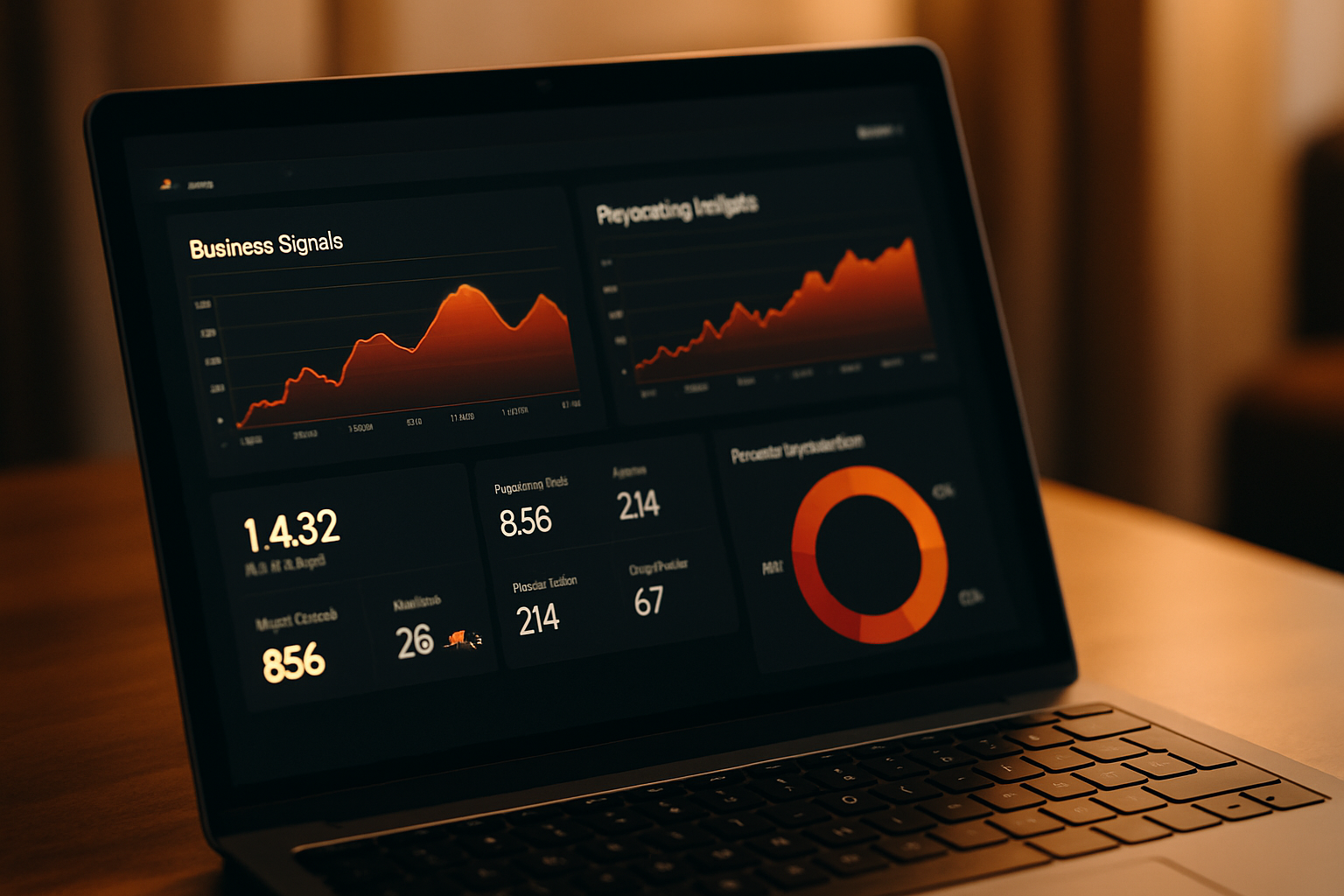
What are Commercial Intelligence Tools?
Commercial intelligence tools are sophisticated platforms designed to analyze business signals, transforming raw data into actionable insights for sales teams. Unlike traditional sales intelligence tools that often rely on static datasets about leads, commercial intelligence tools provide dynamic insights that focus on real-time changes and opportunities in the market. This approach significantly enhances a sales team’s ability to identify and prioritize potential prospects, ensuring they can act when the timing is most advantageous.
Key Features of Commercial Intelligence Tools
- Signal Monitoring: Continuously observes business signals such as hiring trends, financial filings, and company news updates to identify potential buying windows.
- Prospect Briefs: AI-generated one-pagers that provide detailed information about a company's current state, strategic outlook, and priorities—transforming complex data into clear insights.
- Signal Scores: Assigns a score ranging from 0 to 100 to indicate the strength of a commercial opportunity, allowing teams to prioritize their outreach effectively.
- Outreach Angles: Provides sales teams with recommended, personalized reasons to reach out to prospects, enhancing engagement.
Comparison with Traditional Sales Intelligence
Limitations of Traditional Sales Intelligence
Traditional sales intelligence tools primarily aggregate contact data and static information, often failing to provide the dynamic insights or real-time signals that are crucial for timely sales engagements. This limitations can include:
- Static Data Reliance: Focusing exclusively on historical data rather than evolving market conditions.
- Delayed Insights: Lacking the ability to react promptly to market changes that may affect prospective clients.
Acitinar vs. Traditional Sales Tools
| Feature | Acitinar | Traditional Sales Tools |
|---|---|---|
| Data Type | Real-time business signals | Static contact data |
| Insight Type | Commercial intelligence | Sales intelligence |
| Key Offerings | Prospect Briefs, Signal Scores | Contact databases |
| Timing for Outreach | Optimized through detected buying windows | Dependent on lead lists |
The Importance of Real-Time Business Signals
How Business Signals Influence Buying Signals
Business signals are observable data points indicating shifts within a company, such as new funding, management changes, or expansion plans. When interpreted correctly, these signals reveal a company’s readiness to purchase, turning raw observable data into actionable "buying signals." This real-time analysis offers a significant advantage over traditional methods, which may overlook these dynamic opportunities and lead to missed sales.
Statistics Supporting the Effectiveness of Real-Time Signals
Research reveals that companies adopting commercial intelligence tools often experience significant performance improvements. For instance:
- Organizations utilizing data-driven sales strategies report conversion rate increases by up to 20% (Sales Management Association).
- The application of real-time business signals can enhance prospect identification success rates by as much as 35% (Gartner).
How to Effectively Use Commercial Intelligence in Sales
Steps to Integrate Commercial Intelligence into Your Sales Strategy
- Integration with CRM: Seamlessly merge commercial intelligence tools with existing CRM systems to facilitate streamlined workflows and enhance data utilization.
- Training and Education: Equip your sales teams with the knowledge necessary to interpret and act on buying signals effectively, fostering a proactive sales environment.
Case Studies and Success Stories
Companies leveraging Acitinar's features, particularly its Prospect Briefs, have refined their outreach strategies and observed substantial improvements in targeting accuracy and conversion rates. For example, a UK-based recruitment agency reported a 30% increase in successful placements after integrating real-time business signals into their prospecting approach.
Benefits of Implementing Commercial Intelligence in B2B Sales
Advantages of Real-Time Insights and Data-Driven Decision Making
- Increased Targeting Accuracy: Provides timely insights that help identify the most promising prospects early in their buying windows, improving the precision of sales efforts.
- Enhanced Sales Workflows: Streamlines processes by ensuring sales teams focus on companies ready to engage, thereby boosting overall efficiency and effectiveness.
Frequently Asked Questions
What are commercial intelligence tools?
Commercial intelligence tools are advanced platforms that analyze business signals to help sales teams identify new opportunities and improve prospecting accuracy.
How do commercial intelligence tools work?
They monitor a wide range of business signals and convert these signals into insights that indicate which companies are likely to require your services or products at any given time.
What distinguishes sales intelligence from commercial intelligence?
Sales intelligence focuses on collecting data about leads, while commercial intelligence emphasizes real-time market signals that provide actionable insights for sales strategies.
What are the benefits of using commercial intelligence tools for B2B sales?
These tools deliver timely insights into market opportunities, significantly enhance prospect targeting accuracy, and improve conversion rates, allowing for more effective sales strategies.
Conclusion
Commercial intelligence tools like Acitinar represent a significant shift in how sales teams approach prospecting. By providing real-time insights and improving the precision of prospect targeting, these tools not only increase conversion rates but also enhance the overall efficiency of sales workflows. To explore how Acitinar can empower your sales strategy with evidence-based, timing-focused insights, visit Acitinar today and discover the future of data-driven sales.